In ancient Greece, the work "synagogue" meant "assembly", and later connoted the place where the assembly met. The origins of the Jewish synagogue building are unclear, but some authorities believe that it began as an institution for public worship and instruction furing the Babylonian Exile in the sixth century B.C.E. while other prefer a date four or five centuries lates. In any case, it evolved rapidly after the Romans destroyed the Temple of Jerusalem in 70 C.E.
Local and democratic,a synagogue could be established anywhere a group of ten Jewish men gathered to worship through prayer and study. Social and political circumstances determined their locations -in humble or elegant houses, in inns near city walls, or in larger structures financed more amply.
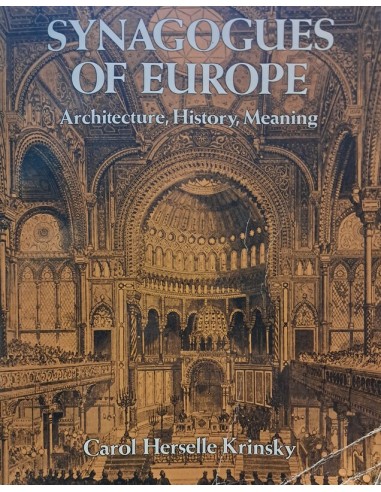
This carefully researched, well-documented and profusely illustrated work presents the great legacy of European synagogues from antiquity to modern times.
The author first offers a general picture of the conditions under which European synagogues were designed, describing the synagoigue's nature, the local regulations that tempered architectural ambitions, the primery furnishinjgs affecting its appearance and spatial arrangements, the architectural changes through the centuries, and the messages that these buildings convey. Subsequent chapters offer brief accounts of individual European synagogues and provide insightful discussions of the varying legal positions, the changes due to geographical and historical forces, the impact of the Reform movement, architectural styles, and the architects themselves.
For any Jew or student of religion or architectur, this comprehensive study, enhanced with over 250 illustrations -including images of synagogues destroyed during the two World Wars -provides a fascinating, authoritative history of the Jewish house of worship.